
Salidroside COA and HPLC Testing: A Buyer's Guide
What Is a Certificate of Analysis (COA)?
A Certificate of Analysis (COA) is a quality document that reports test results for a specific batch of material.
For ingredient buyers, the COA is an important tool for reviewing whether a supplied batch meets the agreed specification.
A COA should be read as a batch-specific analytical record, not simply as a document showing a single purity percentage.
1. Check the Basic Information First
Before reviewing the test results, confirm that the COA clearly identifies the material and batch.
Important information may include:
- Product name
- Batch or lot number
- Manufacturing or testing date, where provided
- Specification reference
- Test items and methods
- Test results
- Acceptance criteria
- Authorized review or approval information
The product name and batch number should match the material and related purchasing documents.
2. Understand the Difference Between Specification and Result
A specification defines the acceptance criteria for a product.
A test result reports the measured value for a particular batch.
For example, a specification may define an assay range, while the COA reports the actual result obtained for the tested batch.
Buyers should check both values:
- Does the batch result meet the agreed acceptance criteria?
- Is the test method identified?
- Is the reporting basis clear?
- Are the units and limits consistent?
A result should not be assessed without understanding the corresponding specification.
3. What Is HPLC Testing?
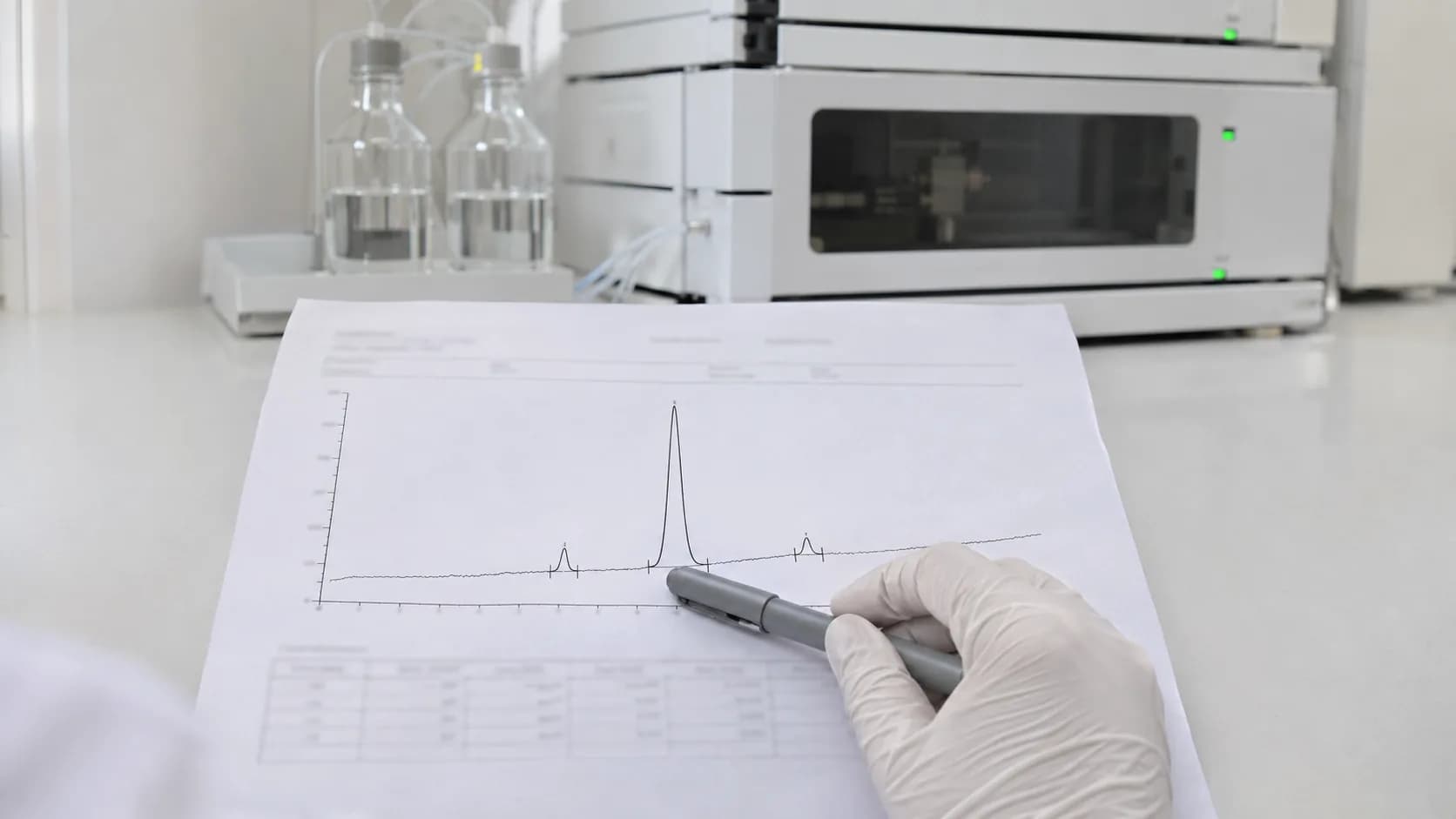
High-performance liquid chromatography (HPLC) is an analytical technique used to separate and analyze components in a sample.
For salidroside, an appropriate HPLC method may be used to support identity or assay evaluation, depending on the method design and validation.
HPLC results may be presented as a numerical assay value or supported by chromatographic data.
When reviewing HPLC information, buyers should ask:
- What analytical method was used?
- What reference standard was used?
- Is the method suitable for salidroside?
- How is the assay calculated?
- Is the result reported on an as-is or dry basis?
The method details matter because results from different methods or reporting bases may not be directly comparable.
4. How to Review an HPLC Result
A practical review should focus on three areas.
Target compound identification
Check whether the analytical method supports identification of the target compound. Depending on the method, retention time and comparison with a reference standard may be relevant.
Assay calculation
Confirm how the reported assay value is calculated and whether the reporting basis is clearly stated.
Chromatographic information
Where chromatograms are available, ask the supplier to explain the relevant peaks and how the target compound is identified and quantified.
Do not interpret a chromatogram based only on visual appearance. The analytical method and supporting data are necessary.
5. Common Mistakes When Reviewing a COA
|
Common Mistake |
Better Practice |
|---|---|
|
Looking only at the assay percentage |
Review identity, assay, impurities, and other relevant parameters |
|
Ignoring the batch number |
Match the COA to the supplied batch |
|
Comparing results from different methods |
Confirm analytical methods and reporting basis |
|
Treating a COA as a complete regulatory dossier |
Request additional documents when required |
|
Assuming every listed test is universally sufficient |
Evaluate tests against product and market requirements |
6. What Other Documents May Be Needed?
Depending on the product and intended market, buyers may also request:
- Product specification sheet
- Safety Data Sheet (SDS)
- Manufacturing or process information
- Allergen statement, where relevant
- Residual solvent information, where relevant
- Microbiological or elemental impurity reports, where relevant
- Regulatory or market-specific supporting documents
The availability and applicability of these documents should be confirmed with the supplier.
Conclusion
A salidroside COA helps buyers review the quality of a specific batch, while HPLC information can provide analytical evidence about the ingredient's composition.
A careful review should consider product identity, specification limits, actual test results, analytical methods, and supporting documentation.
Contact Omni Ingredients to discuss your documentation requirements and request available salidroside specifications and quality information.